

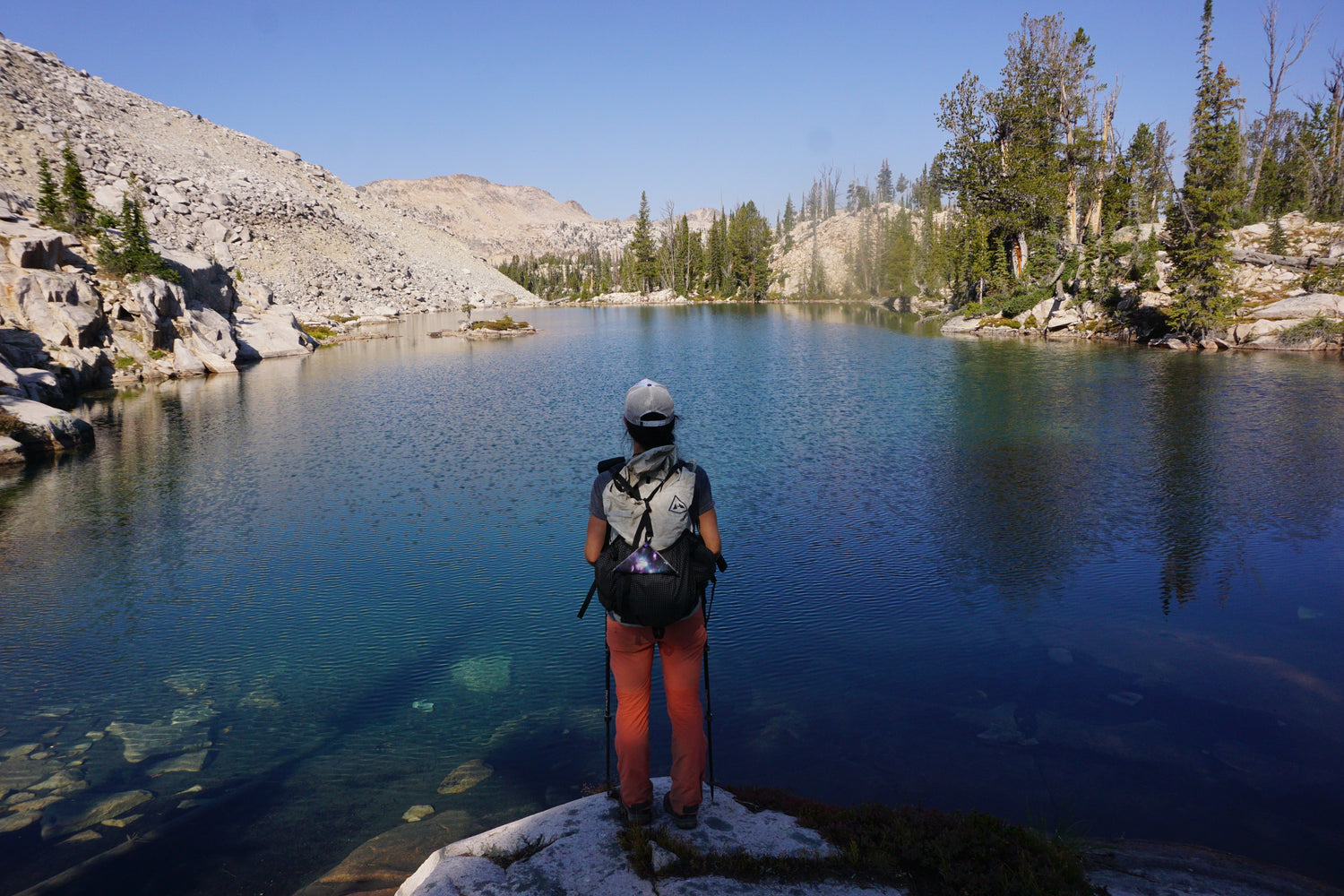
You’ve headed outside. Now… what do you do... when it comes to handle your pee, period... or poo?
Yes, I did make that rhyme on purpose.
Hi friends, I’m Anastasia. I’m the founder of Kula Cloth and a former park ranger, and today I’m going to take you on a comprehensive journey through the world of outdoor hygiene—specifically peeing, pooping, and perioding in the backcountry.

On my very first backpacking trip ever, I didn’t know that I needed to bring toilet paper. I ended up in a sticky (luckily not literally) situation pretty quickly when I had to steal toilet paper from my tent mates just to survive the weekend. That doesn’t have to be you. I also know that it’s awkward to ask somebody else about hygiene or bring up the topic at all, so this guide is for anyone who has questions about how to handle going to the bathroom in the woods—and also something you can share with the people you’re hiking or backpacking with.
I ended up in my toilet-paper-less situation because my group leader assumed that everybody knew how to handle their hygiene when I clearly did not. And some folks, like I was, are too uncomfortable to ask. So if you’re planning a trip, include this in your pre-trip emails and never make the assumption that somebody knows how to handle going to the bathroom outside.
How to Pee in the Woods (Without Overthinking It)
Let’s start with peeing. When it comes to how to pee in the woods, you generally want to go at least 200 feet away from natural water sources. Without a measuring tape, that’s about 70 large steps. You also want to pee on durable surfaces, which means that peeing on the trail itself might actually be the best option. Most folks think they need to get off trail to pee, but that’s not always the case, especially in fragile environments like alpine meadows. Staying on the trail can actually be the more responsible choice. If possible, aim for rocks or bare dirt, because urine can attract critters to vegetation. If you need stability, you can hold onto a tree or use a trekking pole as you squat.
There are a few exceptions to the standard outdoor hygiene rules. In some fragile desert environments, like the Grand Canyon, or other high-flow river areas, it can actually be preferable to pee directly into the water rather than on the fragile shoreline. And in places like The Enchantments, where toilets are flown in and out by helicopter, if you only have to pee, it’s often preferred to go on a durable surface instead of using the toilet so that space is preserved for solid waste. Always check with the land management agency where you’re going, because backcountry bathroom rules can vary.
If you are hiking in a busy area or would simply prefer to pee standing up, there are options. Pee funnels like the PStyle or similar devices allow you to stand. But please—practice first. There are things like wind direction that you may not be used to thinking about, and I learned that lesson the hard way.

Why “Drip Drying” Isn’t the Move
If you are someone who squats when you pee, hygiene becomes more important than most people realize. Drip drying might sound simple, but in my opinion, it only works for a very short period of time. It’s nearly impossible to remove all of the moisture, which means your underwear becomes your pee cloth and you end up marinating in it all day. That might be fine for a quick hike, but over multiple days of backpacking it becomes uncomfortable, unhygienic, and can lead to chafing or infection. Moisture is not the friend of a healthy netherworld in the backcountry. We want to keep things as dry and clean as possible.
You can absolutely use toilet paper while backpacking, but it must be packed in and packed out. Toilet paper can take one to three years to biodegrade, so please don’t leave it behind. There is nothing worse than seeing toilet paper blooms scattered throughout an otherwise beautiful place. This is a simple solution, but it does add weight, and some people are uncomfortable packing it out.
Pee Cloths: What They Are & Why I Use One
Now, it probably won’t come as a surprise that a pee cloth is my preferred option for outdoor hygiene. However, I completely understand if the idea makes you uncomfortable, because the first time I heard of it, my reaction was, “Ooh… that’s disgusting.” A pee cloth is simply a reusable piece of fabric that you use to pat dry after peeing. Yes, I love Kula Cloth, but you can also use a microfiber towel, an old T-shirt, or a bandana. I am not standing here in a trench coat trying to peddle pee cloths. The idea is just to use something reusable that pulls moisture away from your body so you can stay cleaner, drier, and more comfortable while hiking or backpacking.

To use one, simply squat to pee like normal and then hold the cloth in place so it can absorb the moisture. You can usually feel when you’ve dried off enough, and then you just reattach it to your backpack. If you’re using a Kula Cloth, you can snap it closed so the used side isn’t touching your pack. You can reuse it all day. When it comes to cleaning it, you can wash it at home after a day hike, or if you’re on a longer trip, rinse it at least 200 feet away from water with a tiny drop of Dr. Bronner's. Squeeze it out so it’s just slightly damp and either hang it overnight or, if it’s wet out, tuck it against your body while you sleep. You’ll wake up and it will be dry.
How to Poop in the Woods (A Very Important Skill)
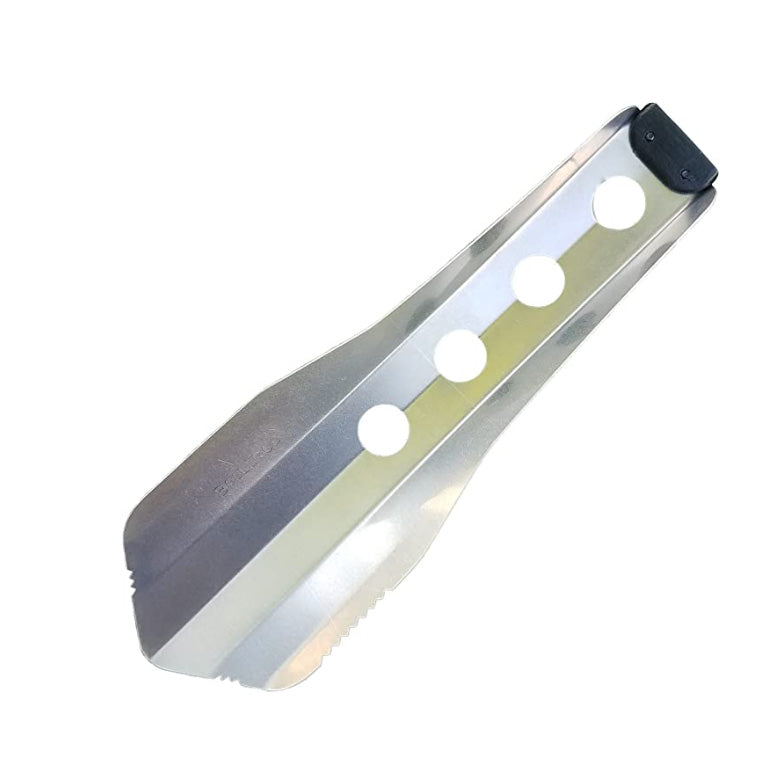
Now let’s move on to the wonderful world of pooping in the woods. If there is a backcountry toilet or privy available, amazing—use it. Toilet paper is okay in there, but nothing else. If there is no toilet, it’s time to dig. Find a spot at least 200 feet away from water and dig a six to eight inch deep cathole. I like using the BoglerCo Ultralight Backpacking Trowel, and I will say that digging that deep is not as easy as it sounds, so prepare yourself for that.
Sometimes the urge to go hits and there is no time to dig first. That’s okay. You can go and then dig your hole and move everything into it afterward. Just don’t leave it on the surface, and always pack out your toilet paper. If packing out toilet paper feels uncomfortable, using an opaque hygiene bag can make the process feel much more manageable.

For cleaning after pooping in the backcountry, you can use wet wipes, dehydrated wipes like PACT, or a travel bidet like the Holey Hiker Bidet or CuloClean. If you use a bidet, I highly recommend practicing beforehand because there is definitely a technique to getting the angle and pressure right. You’ll also want a separate cloth to pat dry afterward.
When You Have to Pack Out Your Poop (Yes, This Is Real)
There is one more method for dealing with poop, and that is the blue bag method. This means you pack out your poop. Yes, really. This is required in certain high-use or fragile environments, like areas on Mount Adams or when you are traveling on snow. Digging a cathole in snow does not count. If you’re in a blue bag situation, I recommend bringing extra freezer Ziploc bags, and some folks even carry an empty Pringles can on the outside of their pack to keep everything contained and avoid any catastrophic situations.

How to Handle Your Period While Backpacking
Finally, let’s talk about periods while backpacking. There are a couple of ways to handle this in the backcountry. You can use traditional products like tampons or pads, but these must be packed in and packed out. They are not allowed in toilets and should never be buried. I recommend using an odor-proof bag to store them, and it’s important to keep them with your food overnight in a bear canister or hang—not in your tent.
The other option is to use a menstrual cup or disc, which is my personal preference for backpacking hygiene. If you’re using one, you handle menstrual blood the same way you handle poop. If there is a toilet, you dump it there. If not, you dump it into a six to eight inch cathole. Clean your cup away from water sources over that hole or a toilet using water and a tiny drop of soap. If you are in a snow environment or a blue bag area, you will need to pack it out in a sealed container, like a Nalgene bottle.

A few important notes about cups and discs: there is a learning curve, usually a few months, and not all of them fit every body. There is also a technique to using them without leaks. So please do not have your first experience with one be on a backpacking trip. Get comfortable with it first.
And the most important thing I can say about periods in the backcountry is this: always bring supplies, even if you are convinced you won’t need them. Backpacking changes your routine, your stress levels, your diet—and sometimes your body surprises you. Nothing will derail a trip faster than being unprepared.
Don’t Forget Your Teeth (Backcountry Tooth Care Tips)
One final note on hygiene: don’t forget about your teeth. I like bringing a toothbrush (you can cut yours in half if you want to get ultralight about it!), a single piece of floss, and toothpaste tablets like Kaylaan Toothpaste Tablets. I usually put as many tablets as I need in a tiny 'bead bag' and carry them with me -- SO much lighter than lugging along a small travel tube of toothpaste.
Brush teeth away from camp, then add a little water, swish, and spray it over a durable surface so you’re not attracting animals.

Your Body Is Your Most Important Piece of Gear
I think that just about covers everything when it comes to outdoor hygiene. Believe it or not, it’s usually not gear failure that ruins a backpacking trip—it’s hygiene. Your body is the most important piece of gear you have, and the better you take care of it, the more you’ll enjoy your time outside.
So don’t underestimate the power of taking care of yourself out there. And I promise you, nature will take care of you right back.
Sending you all the most genuine wishes for WONDERFUL, healthy and beautiful adventures outdoors!
Feel free to leave a comment below and encourage your fellow backpackers!
Love,
Anastasia
4 comments
Sooooo helpful, but I still have a question that I think I know the answer to… but I’m still going to ask… my period disc auto dumps, so does this mean I should be digging myself a cat hole every time I’m peeing while I’m on my period?
I understand that now the US Forest Service requires poop (as well as toilet paper) be carried out. Too many people pooping in the woods.
Pringles can, love it! Thanks for the info!
Thank you!!