
Good motorcycle hygiene can make or break your ride.

The Road Less Talked About
When people ask me how I ended up creating Kula Cloth, they usually assume the story starts with backpacking. And they're partially right. After years as a Park Ranger and backpacking instructor, I became increasingly frustrated by the amount of toilet paper I found scattered throughout some of the most beautiful wilderness areas on Earth. I knew there had to be a better way to help people stay clean while also protecting the places we love.
But what many people don't know is that I actually fell in love with motorcycles long before I fell in love with backpacking.
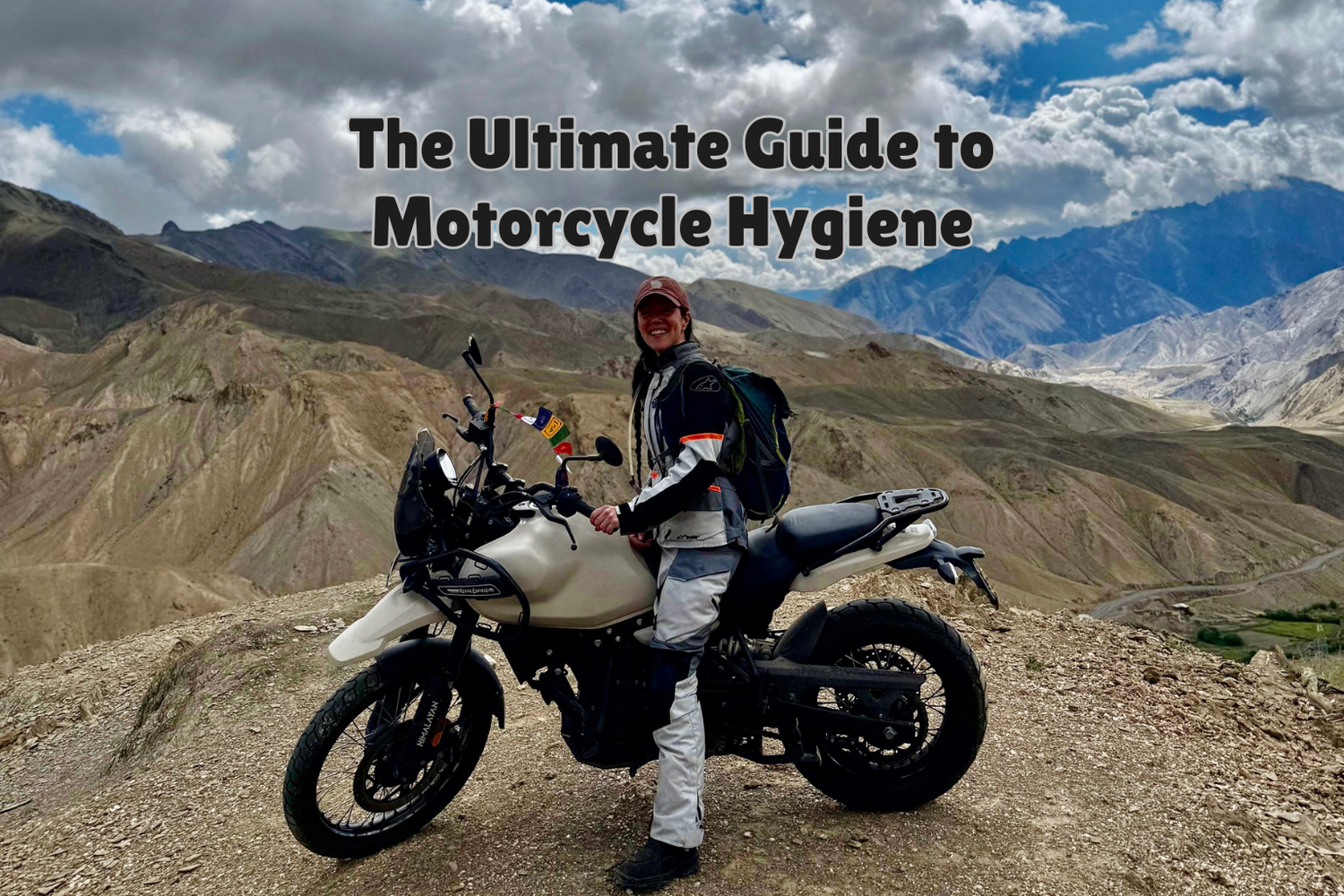
I learned to ride on a tiny Honda XR80. If you're not familiar with motorcycles, picture the cutest little dirt bike imaginable. It was the perfect size to learn on, and it ignited a passion that would follow me throughout my life. Since then, I've owned a few different motorcycles and have spent the last several years riding nearly 20,000 miles on both pavement and dirt—winding mountain highways, dusty backroads, and everything in between. Last year, I had the incredible privilege of completing an 800-mile off-road motorcycle expedition through the Ladakh region of the Indian Himalayas, a place where the roads are rugged, the scenery is breathtaking, and the bathroom situation is...well...let's just say it leaves something to be desired.
Now, before anybody gets the wrong impression, I'm not claiming to be the world's greatest motorcycle rider. One of the beautiful things about motorcycling is that there is always something new to learn. Every ride teaches you something. But somewhere along the way, I realized I'd accidentally become the intersection of two worlds that rarely talk to each other: motorcycle travel and outdoor hygiene.
Those two passions have shaped my life in ways I never expected, and they've taught me something that surprisingly few people discuss: good motorcycle hygiene can make or break your ride. It isn't glamorous, and it probably isn't the first thing that comes to mind when you're shopping for a new helmet or researching adventure motorcycles. But if you've ever had to drip dry after using a restroom with no toilet paper and then spend the next six hours sitting on a motorcycle seat...you already know exactly what I'm talking about.
One quick note before we dive in: this guide focuses on the bathroom side of motorcycle hygiene—peeing, pooping, and periods. Things like haircare, dental care, and generally staying human on a multi-week trip deserve their own article, and they'll get one in a future post. Today, we're talking about what happens below the belt.
Motorcycle hygiene comes down to staying clean and dry during long hours in the saddle. Carry a small kit on every ride—a Kula Cloth®, toilet paper, wet wipes, hand sanitizer, and a trash bag—because restrooms run out of supplies more often than you'd think. Pat dry after every pee, clean thoroughly after pooping, stay hydrated, and follow Leave No Trace principles when there's no bathroom around. Staying dry helps prevent chafing and irritation, and may help reduce the risk of UTIs—so you can keep your attention on the ride.
Why Does Motorcycle Hygiene Matter More Than You Think?

Motorcycles create a very unique environment for your body. Unlike hiking, where your clothing moves constantly and airflow helps evaporate moisture, on a motorcycle you're spending hours seated in one position. Your riding gear traps warmth. Your underwear stays pressed against your skin. Your hips and pelvis are supporting your weight. And if you're touring, adventure riding, or commuting in hot weather, sweat only adds to the equation.
Now imagine adding residual urine moisture—or not cleaning yourself thoroughly after using the bathroom—to that environment. It doesn't take long before discomfort turns into chafing. Chafing can become skin irritation. Skin irritation can become infection. And for anyone with female anatomy, staying damp for long periods may also increase the likelihood of problems like urinary tract infections or yeast infections. If you've ever experienced either one while traveling, you know they're far more than an inconvenience. They're capable of ending a trip.
And before we go any further, I want to say this clearly: every rider is welcome here. Whatever your anatomy, whatever you ride, and however many miles you have under your wheels, staying clean and dry on a motorcycle matters—so take what's useful to you and leave the rest.
I learned this lesson firsthand while riding through Ladakh, India, where we spent eight to ten hours on the motorcycles nearly every day and many of the bathrooms had no toilet paper at all. I'll share the whole story a little later in this article, but the lesson it taught me applies to every single ride, whether you're crossing the Himalayas or crossing town:
The drier and cleaner you stay on a motorcycle, the more comfortable you'll be—and the more enjoyable your adventure becomes.
My Motorcycle Hygiene Philosophy
People often assume motorcycle hygiene is complicated. It really isn't. In fact, I approach motorcycle hygiene almost exactly the same way I approach backpacking hygiene.
My goals are simple: stay clean, stay dry, follow Leave No Trace principles whenever I'm outdoors, be prepared for bathrooms that have absolutely no supplies, and never let hygiene become the reason I stop enjoying my ride. That's it. Whether I'm riding twenty minutes to the grocery store or spending two weeks exploring another country, those principles stay exactly the same.
One of the things I love most about motorcycles is that they give us freedom. Freedom to wander. Freedom to take the long way home. Freedom to stop at that little gravel road you've always wondered about. Good hygiene simply protects that freedom, because when your body feels good, your attention stays where it belongs—on the road, the scenery, and the experience itself.

My Everyday Motorcycle Hygiene Kit

After thousands of miles in the saddle, I've narrowed my hygiene kit down to a handful of items that come with me on nearly every ride.
Kula Cloth®
Obviously. I carry a Kula Cloth every single time I ride—even if I'm just running errands around town. Bathrooms run out of toilet paper. Gas stations close. Road construction happens. Unexpected situations come up. Being prepared means I never have to worry about them. (If you're new here and wondering what on earth a pee cloth is, start with my guide on how to use a pee cloth.)
Wet Wipes
If there's one item I think every motorcycle rider should carry, it's a small pack of wet wipes. I keep them either in my riding jacket, my cargo pocket, or inside my backpack—sometimes an actual travel-sized package, sometimes just a handful tossed into a zip-top bag to save space. If you unexpectedly need to poop while you're out riding, you'll be incredibly thankful they're there. Motorcycling is different from hiking because after using the bathroom, you're immediately sitting back down for hours. Taking an extra minute to clean yourself thoroughly makes an enormous difference in comfort.
Toilet Paper
Always. Even if you're planning to ride through populated areas, never assume the next restroom will actually have toilet paper. Trust me on this one.
Hand Sanitizer
A tiny bottle takes up almost no space and is invaluable after roadside bathroom stops.
Extra Trash Bag
Whether it's used toilet paper, wet wipes, menstrual products, or other hygiene waste, I always have a dedicated bag for packing everything back out. Leave No Trace doesn't end when your ride begins.
Street Riding Hygiene Tips

Most people think hygiene only matters during multi-day motorcycle expeditions. I couldn't disagree more. Even on a quick afternoon ride, I always carry my basic hygiene kit—because you never know what kind of restroom you're about to encounter.
I've walked into beautiful-looking gas stations that had no toilet paper. I've stopped at public restrooms where the paper towel dispenser was empty, the hand dryer didn't work, and there wasn't a single square of toilet paper left. Those situations are annoying in everyday life. They're much worse when you're about to spend the next several hours sitting on a motorcycle seat.
There's nothing glamorous about drip drying and then marinating in damp underwear for the rest of the afternoon. Unlike hiking, there isn't much airflow where you're sitting. Everything stays warm, everything stays compressed, and moisture sticks around much longer than you'd like.
That's exactly why I always use my Kula Cloth after I pee. I simply pat dry, snap the cloth closed, and put it away until I need it again. It takes only a few seconds, and it makes the rest of my ride dramatically more comfortable.
My "Show Kula"
People often ask if I really ride around with a Kula Cloth hanging off my backpack. Absolutely. In fact, I usually have two.
One is what I affectionately call my "show Kula." It lives on the outside of my backpack because I think it's fun. Honestly, it makes me smile every time I see it fluttering behind me like a tiny little flag—and I'm endlessly curious how many people know what it is. For the record, I've actually been recognized by fellow Kula users while riding my motorcycle. Twice! That never gets old.

My show Kula isn't the one I'm actively using throughout the day. It's simply there because I love it. If you're concerned about your Kula flapping in the wind, you can easily secure it with a small piece of Velcro or a couple of discreet safety pins.
Where I Keep the Kula I'm Actually Using
The Kula Cloth I use throughout the day usually lives snapped closed inside the cargo pocket of my riding pants or inside my backpack. Keeping it snapped shut protects the absorbent side from collecting dirt, lint, or other debris rolling around inside my gear. Then, whenever I need it, I simply pull it out, use it, snap it closed again, and tuck it away.
Simple. Clean. Comfortable. Exactly the way motorcycle hygiene should be.
How Do You Pee While Adventure Motorcycle Riding?

One of my favorite things about adventure riding is that it combines two of my greatest loves: motorcycles and wild places. It also means that, eventually, you're going to have to pee somewhere that isn't a restroom.
If you've ever backpacked, the good news is that the principles are almost exactly the same. If you haven't, don't worry—it's actually pretty simple.
The most important thing is to follow Leave No Trace principles. Whenever possible, use an established restroom, vault toilet, or privy. They're there for a reason, and if you have the option, that's almost always the best choice. When nature calls and there aren't any facilities available, walk at least 200 feet (about 70 adult steps) away from lakes, rivers, streams, campsites, and trails before you squat. This helps protect water quality while also giving you a little privacy.
My routine couldn't be simpler: I unzip my riding pants, squat, pull my Kula Cloth out of my cargo pocket, pat dry, snap it closed, tuck it back into my pocket, and get back on the bike. The entire process takes less than a minute. No soggy underwear. No dripping. No discomfort for the next hundred miles. It's one of those tiny habits that makes an enormous difference over the course of a long riding day.
Motorcycles are unique. You're sitting in one position for hours. Your riding gear is designed to protect you, which also means it traps warmth. There's very little airflow where you need it most, so any moisture that lingers tends to stay there.
The cleaner and drier you can keep yourself, the happier your body will be. That means less chafing, less irritation, and a much more comfortable ride.
What About Stand-to-Pee Devices & Pee Funnels?
Here's a topic that deserves way more attention in the motorcycle world: stand-to-pee devices, also known as pee funnels.
Sometimes a pee funnel is incredibly helpful while wearing motorcycle gear with suspenders (think: touring outfits), or gear that's challenging to pull on and off because of body armor. And some motorcycle folks wear full body suits, or a jacket and pants that zipper together. If that's you, using something like a pStyle or a Freshette is a fantastic option that will keep you from having to completely derobe before riding—because nobody wants their riding suit lying on the ground of a porta potty.
The two options I recommend—and that we sell at Kula Cloth—are the pStyle and the Sports and Travel Freshette. Either one lets you pee standing up without taking off your gear, and afterward you simply pat dry with your Kula Cloth exactly like you normally would.

Test your pee funnel in the shower with your motorcycle gear on. The first time you attempt it should NOT be on an actual motorcycle trip.
Ask me how I know.
My India Story: 800 Miles Without Toilet Paper

Last year, I had the incredible opportunity to ride approximately 800 miles through the Ladakh region of northern India. It remains one of the greatest adventures of my life.
The scenery was unlike anything I'd ever experienced. Towering Himalayan peaks. Ancient monasteries. Dusty roads that climbed above 17,000 feet. River crossings. Tiny villages. And bathrooms that looked remarkably similar to the ones I'd encountered while backpacking—many had no toilet paper, some were simple squat toilets, and a few were literally holes in the ground.

Because we were riding at high elevation, I was drinking water constantly to stay hydrated, which also meant frequent bathroom stops throughout the day. Those riding days often lasted eight to ten hours. Had I simply drip dried after every bathroom stop, I honestly believe I would have spent the entire trip riding around in damp underwear. That isn't just uncomfortable—it's exactly the kind of environment that can contribute to skin irritation and other hygiene issues.
Instead, I carried my Kula Cloth everywhere. Every stop. Every day. It kept me dry, it kept me comfortable, and most importantly, it allowed me to focus on the incredible privilege of riding motorcycles through one of the most spectacular landscapes on Earth instead of thinking about how uncomfortable I was.
That's exactly what good hygiene should do. It should quietly fade into the background so the adventure can take center stage.
Watch: Riding Through Ladakh, India
A few seconds of what 800 miles through the Himalayas actually looks like.
Motorcycle Camping Hygiene

Motorcycle camping is one of my favorite ways to travel. There's something deeply satisfying about carrying everything you need on two wheels, setting up camp somewhere beautiful, cooking dinner under the stars, and waking up ready for another day of riding.
The wonderful thing is that motorcycle camping hygiene is almost identical to backpacking hygiene. If I'm camping for the night, my evening routine looks something like this: after my final bathroom break of the day, I wash my Kula Cloth using a bottle of water and a little sprinkle of Wild Batch cleansing powder, always at least 200 feet away from natural water sources. If I'm staying at a developed campground with sinks, I'll simply wash it there instead. Then I hang it somewhere with good airflow while I sleep, and by morning it's clean, dry, and ready for another full day of adventure. (For the full step-by-step, here's my complete guide to how to clean a pee cloth at home and on the trail.)
Overnight trips are also when the travel bidet earns its spot in my luggage. It's my favorite way to get truly clean before climbing into my sleeping bag after a long day on the bike.
Simple systems are usually the ones that actually get used.
What If You Need to Poop on a Motorcycle Trip?

Let's talk about the topic that almost everyone thinks about—but very few people actually discuss. Eventually, if you spend enough time outdoors, you're probably going to have to poop.
If there's a restroom or vault toilet available, fantastic. Use it. If there isn't, Leave No Trace principles still apply. Whenever possible, dig a cat hole six to eight inches deep before you go, and when you're finished, bury your waste thoroughly. Pack out all toilet paper, wet wipes, feminine hygiene products, and any other trash—none of those belong in the cat hole. Even products that are marketed as "biodegradable" often take far longer to break down than people realize, especially in dry or alpine environments.
One thing I strongly recommend: never try to clean yourself completely dry. Remember, you're getting back on a motorcycle afterward—not heading home for a shower. You're going to be sitting for hours, and taking an extra minute to clean yourself thoroughly makes a tremendous difference in comfort.
I personally carry both wet wipes and a small travel bidet. For quick roadside stops, wet wipes are incredibly convenient. At camp, I love using a travel bidet because it leaves me feeling much cleaner before climbing into my sleeping bag. Whichever method you choose, don't skip this step. Your future self will thank you after four more hours in the saddle.
Handling Your Period While Motorcycle Traveling

If you've ever worried about getting your period during a motorcycle trip, let me start by saying this: you've absolutely got this. People have successfully handled their periods while traveling, backpacking, climbing mountains, and exploring remote places for generations. Motorcycle travel is no different.
You can absolutely use disposable products like tampons or pads if that's what you prefer. Just remember to pack them in and pack them back out. I recommend storing used products inside an odor-proof bag, especially if you're camping in bear country.
Personally, my preferred method is using a menstrual cup. I find it easier to manage during extended trips because I don't have to carry nearly as many supplies. When it's time to empty the cup, I either use a restroom if one's available or, if I'm in the backcountry, I treat menstrual blood the same way I would human waste by disposing of it in an appropriate cat hole.
This is also why a small container of Wild Batch All-in-One Cleansing Powder lives in my period kit. Before reinserting the cup, I give it a proper wash using clean water from my water bottle and a tiny sprinkle of Wild Batch—no sink required. I work up a little lather, rinse the cup thoroughly with bottle water until all the soap is gone, and it's ready to go again. As always, do this at least 200 feet away from natural water sources.
If you'd like a deeper dive into this topic, I wrote a complete guide to handling your period while backpacking—nearly all of it applies to motorcycle travel too.
Here's the advice I wish someone had given me years ago: even if you finished your period a week before your trip, pack supplies anyway.
Travel, stress, altitude, time zone changes, long riding days—any of those things can throw your cycle off. The last place you want to discover your period has arrived early is in the middle of nowhere, hours from the nearest store.
A few extra ounces of supplies can save you an enormous amount of stress. And honestly? I'd much rather carry something I don't end up needing than desperately need something I didn't pack.
Preventing UTIs, Chafing & Other Common Motorcycle Hygiene Problems

One of the biggest misconceptions about motorcycle hygiene is that it's only about comfort. Comfort is certainly part of it, but it's also about taking care of your body so it can take care of you.
Long hours in the saddle create a unique environment. Heat builds up inside riding gear. Sweat accumulates. Moisture gets trapped. If you're riding multiple days in a row, those small irritations can quickly become much bigger problems. Fortunately, preventing most hygiene-related issues is surprisingly simple.
Stay Hydrated
It might seem counterintuitive to drink more water when stopping to pee means taking your gear off again, but hydration is one of the simplest things you can do for your health. Don't fall into the trap of avoiding water because you don't want to stop, and don't hold your pee for hours just because you're making good time. Frequent urination helps flush bacteria from the urinary tract, and staying well hydrated is one of the easiest habits that may help reduce your risk of developing a urinary tract infection. Your body—and your brain—will also perform better when you're properly hydrated.
One tip on how you carry that water: if I don't have luggage to keep things off my back, I carry a soft water bottle in my backpack—never a hard one. In fact, you should never carry a hard water bottle (or anything else hard) in a backpack while riding a motorcycle. If you ever go down, you don't want a rigid object between your body and the ground. I really like the CNOC Vesica collapsible water bottle and the Platypus SoftBottle—both are light, packable, and flatten down to nothing as you drink them.
Stay Dry
If there's one theme you've probably noticed throughout this article, it's this: dry is good. Moisture is not your friend on a motorcycle. Every time you use the restroom, take the extra few seconds to pat yourself dry. If your underwear becomes soaked from sweat, rain, or repeated water crossings on an adventure ride, consider changing into a dry pair if you have one available. Your skin will thank you.
Wear the Right Underwear
Since we're on the subject of staying dry, let's talk about what's actually under all that riding gear—because riders ask me about this all the time. In general, non-cotton underwear is best. Cotton soaks up moisture and holds it right against your skin, which is exactly what we're trying to avoid on a motorcycle.
Personally, I ride in Milk Run Moto Hybrid Undershorts. They're synthetic, quick-dry shorts that work great under motorcycle gear—and they double as a regular pair of shorts if needed, which is exactly the kind of multi-purpose gear I love when I'm trying to pack light on two wheels.

Clean Thoroughly
Especially after pooping. Don't rely solely on dry toilet paper if you can avoid it. A travel bidet or wet wipes do a much better job of helping you feel clean before climbing back onto your motorcycle seat.
Pack Extras
I always carry wet wipes, toilet paper, my Kula Cloth, a small trash bag, hand sanitizer, and—on overnight trips—an extra pair of underwear. They weigh very little, they take up almost no room, and every single one has earned its place in my luggage.
One quick note: I'm a rider, not a doctor. Everything in this article is general information based on my own experience—it isn't medical advice. If you're dealing with recurring UTIs, skin irritation, or any other health concern, please talk with a healthcare provider.
The Safety Side of Motorcycle Hygiene

When people think about motorcycle safety, they usually think about helmets, jackets, boots, gloves, armor, training, ABS, and tires. And they're absolutely right. I'm firmly on Team ATGATT—All The Gear, All The Time. I don't ride without it.
But there's another piece of rider safety that almost never gets discussed: hygiene.
Think about it for a moment. If you're distracted because you're chafing...if you're constantly thinking about how uncomfortable you are...if you're worried about developing a UTI...if you're dreading the next bathroom stop because you know there won't be toilet paper...part of your attention is no longer on the road.
Good riding demands presence. Motorcycles ask us to pay attention every single second. Road conditions change, wildlife appears unexpectedly, cars make unpredictable decisions, and weather shifts. The more mental energy you're spending thinking about your body, the less attention you're able to devote to your surroundings.
Good hygiene removes one more distraction. It allows you to settle into the ride. To stay comfortable. To stay focused. To enjoy the journey. Because ultimately, that's why we ride.
The First Time I Fell in Love with Motorcycles

The very first motorcycle ride I ever took wasn't one that I was driving. I was four years old, and our neighbors invited me to climb onto the back of their Honda Gold Wing. As we rolled down the driveway, I can still remember exactly what I felt: the wind, the movement, and the incredible realization that I was this tiny little autonomous human being moving through the world under my own power—or at least it felt that way.
Something shifted inside me during that ride. I knew I wanted to experience that feeling again.
If you've ever ridden a motorcycle, you probably know exactly what I'm talking about. Motorcycles have this remarkable ability to transform even an ordinary road into something magical. The destination almost becomes secondary. The ride itself becomes the experience. Instead of using a road simply to get somewhere, motorcycles gently remind us that we're already there. The path itself is the adventure.
Over the years I've backpacked across wilderness areas, climbed mountains, paddled rivers, and ridden motorcycles through places I once only dreamed about visiting. And every single adventure has taught me the same lesson: life isn't waiting somewhere at the end of the road. It's happening right now. Around the next corner. At the overlook you almost skipped. During the conversation with the stranger at the gas station. While watching the sunrise from your campsite. Or while riding through the Himalayas wondering if the next bathroom will have toilet paper.
Those little moments become the stories we remember forever.
Motorcycle Hygiene Packing Checklist

Every Ride
- Kula Cloth®
- Toilet paper
- Wet wipes
- Hand sanitizer
- Small trash bag
- Drinking water (a soft, collapsible bottle if you're carrying it in a backpack—never anything hard)
- Stand-to-pee device like a pStyle or Freshette (optional—especially handy with one-piece suits, zip-together gear, or suspenders)
Overnight & Motorcycle Camping Trips
- Everything above
- Travel bidet
- Wild Batch cleansing powder
- Water bottle for cleaning
- Extra underwear
- Trowel (for dispersed camping where appropriate)
- Menstrual supplies (if applicable)
- Odor-proof waste bag
- Small quick-dry towel
Frequently Asked Questions About Motorcycle Hygiene
How do you pee while adventure motorcycle riding?
Whenever possible, use established restrooms. If none are available, follow Leave No Trace principles by walking at least 200 feet from water sources, campsites, and trails. After peeing, pat dry with a Kula Cloth before getting back on the bike.
Why is motorcycle hygiene different from hiking hygiene?
Motorcyclists spend hours sitting in one position while wearing protective gear that traps heat and moisture. Staying clean and dry becomes even more important because there is very little airflow while seated.
Can riding a motorcycle increase the risk of a UTI?
Motorcycle riding itself doesn't cause UTIs, but spending long periods in damp clothing, holding your urine, or not cleaning yourself well after using the bathroom may contribute to conditions that increase risk. Staying hydrated, urinating regularly, and keeping yourself clean and dry are simple habits that may help reduce that risk.
What's the best way to stay clean after pooping during a motorcycle trip?
Whenever possible, use a restroom. If you're in the backcountry, follow Leave No Trace principles and carry toilet paper, wet wipes or a travel bidet, hand sanitizer, and a trash bag to pack everything out.
What's the best menstrual product for motorcycle travel?
Many riders successfully use pads or tampons. Personally, I prefer a menstrual cup because it creates less waste and works well during extended trips.
Can I use a pee funnel with motorcycle gear?
Yes—a stand-to-pee device like the pStyle or Freshette is especially useful with touring suits, suspenders, body armor, or jacket-and-pants combos that zip together, because you don't have to remove your gear to pee. Just practice at home first (in the shower, with your gear on) before relying on one during a trip.
What's the best underwear for motorcycle riding?
In general, non-cotton underwear is best—cotton holds moisture against your skin. Choose synthetic, quick-dry underwear instead. I personally wear Milk Run Moto Hybrid Undershorts, which work well under riding gear and double as regular shorts.
Should I carry a Kula Cloth on a motorcycle?
Absolutely. I carry one on every ride, whether I'm heading across town or across a continent. Bathrooms run out of toilet paper more often than you'd think, and staying dry makes a tremendous difference during long days in the saddle.
Can I use a Kula Cloth while motorcycle camping?
Yes. The same hygiene principles that apply to backpacking apply to motorcycle camping. Clean it each evening using soap and water away from natural water sources, or wash it in a campground sink if one is available.
What should every motorcycle hygiene kit include?
At minimum: a Kula Cloth, toilet paper, wet wipes, hand sanitizer, a small trash bag, and drinking water. For overnight trips, add a travel bidet, Wild Batch soap, a trowel, extra underwear, and any menstrual supplies you may need.
Oh — hi! I'm a marmot, and I've decided I'm coming with you. I've spent my whole life whistling at riders from the rocks above the pass, and you all look like you're having entirely too much fun. I don't take up much room. I packed my own snacks. And I saved a little secret for you: the best part of the ride isn't the destination — it's that you decided to go. Now zip me back in; it's windy out there. 🌿
clip the lid back down ↩All The Gear. All The Time...and Hygiene.
Motorcycling is one of the greatest gifts my life has ever given me. It asks us to be fully present. To pay attention. To notice the smell of pine forests, the temperature dropping as we climb a mountain pass, the warmth of the sun breaking through clouds after a rainstorm, the joy of waving at another rider coming the opposite direction. All of your senses come alive in a way that's difficult to describe until you've experienced it yourself.
My hope is that knowing how to take care of your body allows you to enjoy even more of those moments. I'm still firmly on Team ATGATT—but I'd like to unofficially add one more letter. Maybe it should be ATGATTH: All The Gear, All The Time...and Hygiene. Because taking care of the body inside all that protective gear matters just as much. When your body feels good, your mind feels better. When your mind is focused, you become a safer rider. And safer riders get to enjoy more adventures.
I sincerely hope that more people have the opportunity during their lifetime to discover the freedom, joy, and wonder that motorcycles have brought into mine. Ride safe, friends. Take care of one another. And if Kula Cloth gets to be a tiny part of your adventures, know that I am deeply honored.
I'd absolutely love to hear where your motorcycle takes you next.
With gratitude,
Anastasia
Founder, Kula Cloth®

Anastasia Allison
Anastasia Allison is the founder of Kula Cloth®, the intentionally designed reusable pee cloth. A former Park Ranger and backpacking instructor, she has spent years teaching outdoor hygiene and Leave No Trace practices—and has ridden nearly 20,000 miles on pavement and dirt, including an 800-mile off-road motorcycle expedition through the Ladakh region of the Indian Himalayas. She lives in Washington State, where she is probably out riding right now.
1 comment
Thank you for this! Long time fan here, I appreciate your posts and persepctive, passions and pastimes… and your product! I hope you appreciate I alliterated purposefully with P’s :) I’m an avid motorcyclist too, I’ve ridden 10s of 1000s of miles (my favorite trips are the multi-day camping trips on a Ural with my dog) and I’m ever-seeking more opportunities for adventure motorcycling through travel (I’ve been off-roading through Ecuador and Canada… Vietnam is on the horizon!) I’m bookmarking this info for preparation for my next big trip. Thanks! Ride Safe!